






Main menu:

QUESTION TO THE SPORT PSYCHOLOGIST

Question: I consistently over swinging in my golf game. I don’t understand why. I say to myself, “Easy does it!” I try to ease up. I really do. Then I take a swing at the ball. Like a Greek chorus, my partners sing out “I’m swinging too hard.” It just doesn’t feel possible. One day I got a little paranoid. I began to think that they are just trying to drive me nuts. It didn’t feel possible that I could swing any easier. I tried to visualize my club going back softly and returning to the ball with no effort. And still the chorus sings out the same song. My performance is so inconsistent. I walk around the course thinking to myself and talking out loud. This is not fun. I’m running out of patience. I already told my pals, “If I hear another chorus of I’m swing to hard, I’m going to bend my club around someone’s cranium as well as the game. I take a swing and wait for the singing to begin. Everyone sees it differently than I experience it. I even went to a pro at a local golf club. Ten lessons later, he wanted to quit the business (kidding). He couldn’t get me to slow down and ease up. He even held my arms and swung them for me without a club in my hand. So, I came across your blog and I figure you are a sport psychologist. Maybe you have an idea. Maybe you can help me attach my body to my mind in a way that will improve my swing and my athletic performance. Any ideas?

Answer by Paul Schienberg, PhD: Well yes. Here is a thought. Trust your clubs! Somewhere inside your neurological system may exist a belief that unless you swing hard, muscle your shots, swing with a lot of club speed through the ball, you will not get the results you fantasize about. Most of us played baseball as a kid…swung the bat from our heels, as hard as we could and watched the baseball fly over the fence. Or, maybe we watched golf on TV and began to believe that swinging like Tiger Woods would get us his results. I’m suggesting that instead of your body working so hard, let the clubs do the work for you. They were designed by people who know how to build a club that would get the ball where it was intended to go. Try the following mantra: let my club take my ball where I want it to go. Whether it is a driver, long or short iron, or sand-wedge, they are designed correctly. Don’t try to make it happen. Be easy with it. Feel the flow of your body and arms - not the speed of their movements. When we don’t trust our clubs, we put too much effort into our swing. It is the appreciation of the ability already built into those clubs that will make it work. The smooth, tender and sensitive relationship to each club that lets them work as they are designed to work. By the way, it is interesting to watch some women play on the same golf course. They are less likely to fall into the mistake of over-swinging. They don’t think of killing the ball, but they often let their club do the job it was built to do. Do not worry. Your mind is attached to your body. It needs to send a belief message to your body that creates a harmonious relationship - not an over-powering one.

Lost My Golf Club Membership And My Love For the Game

By PAUL SCHIENBERG, PhD

Sport Psychologist

May 25, 2007

Question: I was a member of a private golf club on Long Island. Due to personal reasons, I could not renew my membership and now play on public courses. I face a number of issues now while playing golf that has affected my performance. Firstly, there are longer waits between shots. Secondly, I used electric golf carts to get around the public courses. Now, I pull a golf cart. I get more fatigued by the twelfth hole. And finally, I’m playing with people I don’t know. Do you have any suggestions regarding these issues?

Answer: I certainly don’t mean to meddle in your personal affairs. Your question has the “sound” of someone who has taken a shot to the circumstances of life as well as your ego. I will not play armchair psychologist and get into your very personal matters. Often setbacks in one part of our life can have rippling effects on other aspects.

It’s difficult to not take things personally – like “why me?” I want you to hear the answer to this question as helpful. It is, “Why not you?” It happens at one time or another to all of us. Now, I’m sorry to say it is your turn. If you can turn your negative thoughts about public courses into thoughts of positive opportunity, you will enjoy your game again. So, here goes.

There is some pride that comes along with golfers noting, “I play at the (blank) Country Club.” What’s not to like about driving up to a beautiful building, having a valet greet you by your name, and park your car in “your spot.” Then you walk into the country club building, down to the locker room, your shined golf shoes are sitting under your locker, and so on. Your golf bag is set up by the practice tees. I won’t go on. You got the idea. You were living that golf life. Now you are living a different golf life – the public links. I do understand that changes, especially negative ones, can create negative thoughts that will affect all aspects of your game. It will take some adjusting to the new rituals of playing at public links.

You know many important golfers began playing golf on public links. Tiger Woods’ father got his start on a course in Brooklyn…that’s where he got the bug and passed it on to his son. There have also been many important golf tournaments that have been played on public courses – Bethpage most recently. I have been on some very beautiful public golf courses that have great amenities.

Think about this: Who are the people who play on public courses? Those golfers who will do anything to play the game – get up at 5:30 AM on a weekend morning, put their names on a list, slug down coffee to wake up, clean and shine their own clubs, etc. These people love the game and sacrifice a lot to play it. I’m not trying to say the golfers who are members of country clubs don’t love the game. But, they are often drawn as much by the accoutrements of the Country Club as the game. Maybe you can look at the public course players you will meet on the course as purists.

Instead of missing the electric cart, you can focus on the opportunity to walk a course. You are strolling the course (yes, I remember, pulling the cart). You can learn more about how to play that particular course because you will see more of the course. Phil Michelson walks the course when he’s in a tournament. He gets a birds eye view of the type of grass, rolling hills, etc. You will be treating the entire course as you walked the greens at the Country Club.

It helps keep you in better physical condition. Instead of having a large meal right before and/or after you play at the Club, you will actually experience the exercise benefits of having walked about 8,000 yards. By the way, if you are pulling a cart, remember to switch arms.

The better your physical condition, the better you will play.

Again there are often longer waits between shots on public courses. It is true that the rhythm of the game changes when there are long waits. It is very important not to get aggravated. I would do some stretching exercises, practice swings, talk to the fellow golfers (not about the delay), etc.

I hope these ideas make this transition a better one for you and you experience the changes as a gain.

Technorati Profile

EDITORIAL: ROGER CLEMENS HAS RISEN AGAIN!

Roger Clemens flew into Yankee Stadium this past week to save “Gotham” from total disaster. He arrived without notifying his best friends - Pettite, Jeter, Posada - fellow pinstripe teammates. He hovered in the box over the crowd that was watching a day time baseball game. During the seventh inning stretch, Roger grabbed the microphone and announced that the second coming had arrived - or was it the third or fourth coming. He claimed not to be able to resist the opportunity to reunite with his pals who were in trouble and give the Organization another championship. The fans (boys, girls, fathers, mothers, etc.) looked up towards the heavens and saw the hero announce that he had risen again to save those who could not take care of themselves.

What is the real story? It is that he was contacted by the Yankee general manager at Fenway Park, home of the Boston Red Sox. What was he doing there? He was thinking of doing his resurrection up there. Also, he was considering his most holy appearance in Houston. So, why did he choose the Bronx to perform this miracle? How does $28,000,000 sound as a very good explanation.

I’m certainly a respectful appreciator of the achievements of Roger Clemens. He has been a magnificent pitcher and deserves to be in the Hall of Fame. But, this latest stunt has cast a darker shadow on his image. He said his good byes and everyone wished him well. He already road into the sunset as a pitcher. Everyone cried their tears. Now he wants baseball fans to be so excited about his return.

As a child I wanted to trust my heroes. When they said something I listened. I looked to them for a moment of truth about how to conduct myself as a man. Say it ain’t so, Roger. When Mattingly said his good byes, he came back as a coach. This was a model for what life is about and how to deal with the existential realities of life. This helps children deal with the stages of development.

When Roger announced that he couldn’t resist rejoining his pals to save the team and give the fans another championship he is disingenuous. His ego could not be so large as his behavior indicates or could it be? Does he really see himself as a savior? He owes his ex-teammates and fans a more honest expression of motivation. What does this do to the morale of a team? What does it do to the kids who have been Roger Clemens fans? I am suggesting Roger is only serving Roger, not his team, his fans or baseball itself.

by Paul Schienberg, PhD

INTERVIEW: GEORGE LOPEZ - Host of The Bob Hope Dessert Golf Classic for 2007

With Paul Schienberg, PhD

curacoa-2005-172.jpg
Schienberg: Golf can play an enormous part in children’s development and personality development. What role has it played in your life?

Lopez: You know I grew up not having a father. Golf is the father I never had. It taught me honesty and respect and discipline and it taught me to control my temperament. I never got that advice from a human being or from anyone in my family. I hit lemons in the backyard as a kid. I had Christmas and played golf for the first time in 1981. I have not put a golf club down since. It is the tissue that keeps my body connected and I don’t ever imagine living without playing.

Schienberg: Did it turn something about you around?

Lopez: Oh yeah, everything we play when we are growing up, is team related. In this game (of golf) you can find all the answers yourself. You don’t need to throw the ball in the air and play catch with yourself. You get a bucket of balls and go out there with your clubs, and you hit and learn and you get better. And there’s no top. You can be as good and continue to get better and the reward is in every swing. There’s a possible reward in every swing.

Schienberg: There’s a new chance?

Lopez: There’s a new chance! Exactly! And that’s why I’ve gotten very involved with promoting the “First Tee.” The “First Tee” was not around when I was growing up.

Those core values were everything I learned from playing golf. And if the kids learn it at a better age, maybe one or two will ever be professional golfers, but they will become better people. And that’s what golf teaches that no other sport does teach as well.

Schienberg: And it clearly did that for you?

Lopez: Absolutely! I am living and breathing proof. Great temperament! I am a Taurus. I was a hot head as a kid. And that’s all gone. Whether I’m playing good or bad you can never tell because I’m always happy.

Schienberg: You can never be a hot head and play great golf?

Lopez: You can, man! It’s like life. You got to see where the trouble is in every shot and you look at it the course and the shots as a series of challenges.

Schienberg: And how to meet and fix the challenges of life tasks? And that’s how you got here!

Lopez: And I love it! And I wouldn’t have achieved so much if I had not started to play golf. I’m playing man. I’m playing. Life is great and golf has been one of the great parts of it for me.

Schienberg: What do you think of the demographics of golf?

Lopez: We got more people from diverse backgrounds that are younger than ever coming to watch golfers play and play themselves.

INTERVIEW: JEFF SLUMAN

With Paul Schienberg, PhD

At The 2007 Bob Hope Pro-Am Dessert Classic

sluman-448×266.jpgJesper Parnevik hit an extremely large number of golf balls with one club. He was clearly trying to work out something that he didn’t like in the morning practice round. Jesper looked frustrated with each shot, even though from this amateur golfer’s point of view, they seemed to be flying beautifully. At some point, Jeff Sluman, who was practicing at the next driving range tee, came over to where Parnevik was swinging. They talked and laughed. It seemed to break the ice surrounding Jesper’s head. Parnevik loosened up as the two men were gabbing. It was evident that there was a long standing camaraderie between them.

I got an opportunity to ask Jeff Sluman about the interaction between him and Jesper. “Did you give him some needed advice?” Sluman shook his head and said, “No. You can’t talk to Jesper about his game. He won’t listen. I just get him to relax by making him laugh. You see, his father was a comedian and he loves to laugh. It takes the pressure off of his game and he plays better. I’ve known him a long time and I see when he’s getting twisted up.”

Schienberg: “Yes, I can see you are good friends. While I’ve got you, I’d like to ask you about the mental aspects of your game?

Jeff Sluman: Sure. Give it a shot. I’m not a deep thinker.

Schienberg: How have you changed emotionally while playing golf?

Jeff Sluman: I’m a much more relaxed player today. It’s become my personality. I had been a fiery guy when I was young. I’d get frustrated; loose my cool and my stroke. Now, I concentrate on being calm. It does not take any effort now to remain tranquil even when things don’t go so right on the course. It just didn’t help my game nor did I like being that person who lost control and got so upset.

Schienberg: What do you think about re-doing golf swings?

Jeff Sluman: I don’t think it is a great idea to do major changes in a golf swing. Every player has the swing that fits his makeup – both physically and mentally. A tweak here or there is one thing, but it is more likely to create bigger problems if large changes are undertaken. I’ve known more players to get injured and screw their brains around when they change their swing so much. If things are not going well for me, it usually means that I’m not following my pre-shot routine – even if I think I am. So, I become more diligent about it.

Schienberg: Tiger’s not here. How does it affect you?

Sluman: Not very much.

Schienberg: Let me put it differently. What’s it like to play with Tiger?

Sluman: Well, let me put it this way. Tiger is focusing on Tiger. He’s not interested in what you are doing. He is totally focused on himself and his play. I try to do the same thing, but it is very different with him in my pairing. It is almost impossible to ignore what he is doing. In part, it is his personality, charm, complete composure and ability to make remarkable shots. It’s like you just feel compelled to be a spectator even though you are playing the game

INTERVIEW: PHIL MICHELSON


With Paul Schienberg, PhD

curacoa-2005-171.jpg

At the 2007 Bob Hope Pro-Am Dessert Classic Golf Tournament

Phil was asked about his somewhat erratic play after the loss at Wingfoot. Did he think about the loss at the Open? Was it driving him to distraction? Phil said he didn’t think about the loss at Wingfoot until after the entire season of golf had been completed. His erratic play was not in any way related to being upset at the loss. In fact, he said there were two majors where he played at a level that was okay with him. Although he didn’t win in either tournament, he played well enough to be satisfied with his play. His tone of voice and facial expression were less convincing. He said that the biggest problem he has had over the past two years was being terribly out of condition. In fact, Phil does look like he has lost a considerable amount of weight. He sees his game improving from now on because he has become so dedicated to getting and staying in much better shape. He felt that when he wasn’t in shape it was more difficult to get the head of the club to be square with the direction he wanted the ball to go.

Phil shared his thoughts about the new square driver. He exclaimed that the square driver is a great way to go if you want to hit the ball long and straight. If, on the other hand, you like to hit a fade or a cut drive, stay with the round headed driver. Some holes are made for a straight drive and others are calling for movement on the drive. This is why he has carried both the square headed and round headed drivers in his bag.

He also touched on Michelle Wie. Phil noted how impressed he is by her maturity. He appreciates her decision to go to college at Stanford and not go out for the professional money. She is sixteen years old and Phil hopes that his daughters make the same kind of mature decision that Ms. Wie made.

When asked about his approach to playing the Tournament, Phil focused on needing to get very low scores. He sees that there are many birdies to be had, the holes are not long, the greens are easily reachable and so there will be many opportunities to make under par putts. If he is not in a position to make those putts for low scores, and he doesn’t sink them, it is unlikely that he will come close to winning. The emphasis needs to be on putting, not driving.

Phil found the Bob Hope Pro-Am Dessert Classic to be mentally and emotionally exhausting. The pro-golfers had to play 3 practice rounds and 5 tournament rounds – four of the five rounds were played with three amateurs. The final round of the tournament was played with professional golfers only. This was the first tournament of the season and he didn’t feel mentally equipped to handle it. He complained about the weather conditions as well. The conditions were awful. Southern California had been having very cold temperatures. It even snowed in Malibu. There were two days of cold drizzle, and two days of high winds out of the dessert. Phil was drained by the intense focus it took to play each shot. During the final round, Phil hit three balls in the water. So, there were at least three factors that he sighted for his mental exhaustion: the weather, playing with amateurs and the requirement of so many rounds of golf in consecutive days at the beginning of the golf season.

INTERVIEW: JEAN POTVIN Part II

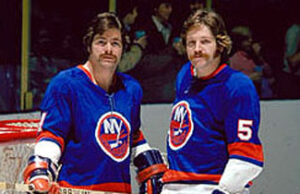
potvinbrothers.jpgWith Paul Schienberg, PhD

Part II: The Rise and Fall of A Professional Sports Team

Schienberg: The rise and fall of the New York Islanders is of great interest. An expansion team may be in existence for four, five, six years. Then, all of a sudden it wins the Stanley Cup (highest trophy in hockey for a team).

Potvin: In the last two years that I played we won the Cup and then they won two more right after I retired.

Schienberg: And the team came out of no where, right?

Potvin: People could see us coming because starting ….I was traded to the Islanders at the end their first season in the NHL 1972-73. At that time the Islanders went on to have the worst record in the history of the NHL up to that point. That summer my brother was drafted, Bill Torrey, a genius, general manager, recruited Al Arbor was recruited to become the coach. Al was the best coach I ever had. He and Scotty Bowman were the best coaches that ever coached hockey.

Schienberg: So, when Arbor came in, whatever talent had begun to be there, he added to the significant pieces to that team?

Potvin: What happened was that my brother was drafted with Bobby Bourne; and, the year before he had drafted Bobby Nystrum. Then, Trottier was drafted the following year. Clark Guilles was drafted also. Then John Tunnelli was added. So Bill Torrey was doing a wonderful job of scouting, recruiting and drafting these wonderful, young kids and they would come to training camp and there would be another piece to the puzzle. And Al was unbelievable at putting, implementing systems, disciplines on how to for-check, back check, different systems on the power play, penalty killing, how to play in a tight game against an offensive minded team like the Montreal Canadiens of the 70’s, how to play against a rough and tumble hockey team like the Philadelphia Flyers and we repeated these systems at nauseas in practice. He would say, I want you to be able to do these things and recognize these things automatically on the ice without having to think. I want you to react instinctively and this is the way I want my teams to grow together. It was a combination of talented players that would be put together and coached extremely well by Al Arbor and every year from then on in we started to noticeably improve. In 1975, we made the players by beating the New York Rangers. Some of the Ranger players like Derik Sanderson said we would not win another game in the playoffs. It almost turned out to be true because we lost the next three playoff games against Pittsburgh. We were only the second team in the history of the NHL even to this day to come back from a three game deficit and beat Pittsburgh in seven. The seventh game we won one to nothing. Then we played the Flyers. We lost the first three games of that series and came back and won three. We lost the seventh game four to two. Every year after that if you look at our point in the standing we accumulated more points and then finally everything came together in 1979-1980 season. It didn’t start off like that. It didn’t look like that. In the middle part of the season my brother broke his thumb and he missed several months during that season. When he came back, I think it was sometime in March, he had not played since November, and at the trading deadline another fantastic trade occurred. We acquired Butch Goring.

And that was like the last piece of the puzzle. And with Dennis Goring and a healthy lineup, we hit our stride going into the playoffs. Al was great with preparing us and resting us, so we would enter the playoffs on a roll. A lot of teams crawled to the playoffs and make it, but they were not well prepared. They were tired. He was some kind of psychologist himself.

Schienberg: What was his personality like that gave him such a head for being a coach?

Potvin: Al was very unpredictable and that was the way he wanted it. Very simply put, I remember the first year Al Arbor came and I was playing regularly and then he started to take away some of my ice time. I went from playing twenty five minutes a game to dwindling from 15 to 10 and I was steaming. And Al would purposely not talk to me in practice and I would be dressing, I would play the power play and that was about it and I would be sitting on the bench and feeling really angry at him. And he wanted to see what I was made of – so instead of saying anything to me, he wanted to see what I would, how I would react. So, one day after practice, I said, “Al I want to talk with you.” He said, “Fine, when do you want to talk?” My reply was “Right after practice, today.” He said, “I can’t today, but I’ll do it after practice tomorrow.”

I did not know it but we had a video guy who taped all the games. It wasn’t like today. There was a guy in the press box who was taping all the games. Al had this video guy splice all the screw ups I made over the last seven, eight, nine games. The next day I go into his office after practice. All had a knack, you see he was a pretty big guy like 6 feet two inches. His chair was always a lot higher than the chair sitting across from him. So, you’d be sitting up looking up at him. He said, “What’s on your mind?” “Let’s cut to the chase here, I’m really upset. I’d like to know why my ice time has gone from 25 minutes to ten.” He said, “Why do you think that’s happening?” “I didn’t know. I think I’ve been playing pretty well, getting a few points here and there,” I noted emphatically. He said, “Why don’t we watch a couple of video highlights of you over the past several games?” The video shows me going into the corner of the ice with the opposing player and the opposing player has the puck and the opposing player beat me out of the corner and goes in front of net and scores or the goal tender has to make a big save. And he replies it two or three times and doesn’t say a word. Then he says, “Let’s go onto the next clip in the same game.” And he’s got all these clips one right after the other and it’s a piece where someone goes right around me at the blue line and heads towards the net alone and it’s my fault. So, he does this for three or four different instances. He says, “So you still think you’re playing pretty well?” He says, “Let me explain something to you and you might as well know it now. All I want, nothing more and nothing less, is one hundred percent. And if you think that is too difficult to give me I got a big problem with it. Let’s break it down. How many games a week do we play on average? Three four? Let’s say you are playing twenty minutes a game. That makes eighty minutes a week. If I can’t get 80 minutes of your best, whether you have the puck or don’t, you should be thinking, who’s my man, what position should I be in, where should I be if they have the puck, where should I be if we are on the offense. You have a job for twenty minutes a game. And if you can’t give me that, let me know and I’ll have you on the first bus out of town. Do we understand each other?” I said, “Yeah, I got it. Thanks Al.” On the way home I said to myself I can’t argue with the guy. He’s 100% right. It was part of growing up so to speak. He did it not just with me with me. He did it with my brother and many other players. He would pick his spots and all of sudden we were on the same page. We all at one point or another got the same speech. And he did it individually – not with everyone in the room where you are not paying attention.

Schienberg: Was he glad that you came to him finally?

Potvin: Oh yeah, I forgot to mention. He gave me a tap during practice. I was playing better. I was getting my ice time back. He said, “Potzy”. I’m very proud of you. I’m glad you came to me because I would have allowed you to sit there. I wanted to see what you were made of. If would have sat there and accepted that would have told me volumes about you and your heart and your gut. The fact that it upset you makes me happy. And that’s the way I want you to be because you are hungry – stay hungry. Al was a master of getting the best out of his players. And he would do it in different ways with different players.

Schienberg: Do you think he knew he had to provoke you?

Potvin: Every now and then he knew I had to be kicked in the ass. He use to really upset my brother.

Schienberg: How did he do it to Dennis?

Potvin: Well, Dennis was the real cornerstone of our team. He was the defenseman, quarterback, the captain. And Al would pick on him. Let’s say, after the first period, if we were not playing well, Al would come in the room right before the buzzer would come on signaling we had to go on the ice in two or three minutes. He’d say, “Listen, I’m not going to name any names here, but this has got to stop. I don’t care how well they’re playing. If we were playing our best hockey this would not be happening.” His voice would go up and down. He was a very intimidating person – not physically. He then say, “I’m not going to mention any names.” He would then talk about what we did wrong and then he’d turn to my brother and he’d say, “You, you’re the captain, I didn’t see you, where were you the whole period?” Denny wouldn’t say anything. But, Denny would play with an edge and play great hockey. Denny would be so upset with Al. But Al didn’t care because he knew he had pushed the right button. After I retired, I asked Al why he didn’t treat Trottier or Bossy the same as Denny. Al indicated that he knew if he could get Denny playing, the others would follow suit. And Denny to this day does not totally believe that Al was doing it for Denny’s good. He was very angry at Al for many years. Denny said that if Al had walked in front of his car after practice, he would have run him over. There was no love lost between the two of them. Denny has a bigger ego than I do. And they would butt heads. That’s why Al wanted me around. Denny and I would go out after a game and hang out together. Denny would vent his anger at Al and Bill with me. I’d say calm down. “You played like a hall of famer the last two periods. In the first period, I didn’t know if you’d have enough strength to finish it. Al may have pissed him off, but look at the results.”

Schienberg: Did that get through to him?

Potvin: It still would piss him off. Why doesn’t he pick on the others. I’m getting tired of being the whipping horse. So, Al was a master. He didn’t give a crap if we were angry at him. But, Al would go to bat for us with the press or with Bill Torry. Bill was unbelievable also.

Schienberg: In what way?

Potvin: Bill was always around, but he’d let Al run the locker room. Sometimes Al would turn to Bill and say I’m out of words. So, Bill would come into the locker room dressed in his bow tie after practice and we would be sitting there and he’d start “Trainers get out of the room. Al get out of the room.” When Bill spoke we were going to get creamed. He’d slam the door and lock the door and pace the locker room back and forth for ten minutes. “You can continue to play like that but it won’t be here.” He once said to me, “If your father ever saw you play, he be kicking your ass all over this room. Do you think your father would be proud if he saw what you were doing out there on the ice?” Our father was a very good hockey player and he’d played against Montreal in jury hockey and then went to the Detroit training camp and broke his back and his career ended. He was a little tiger. He was not a good loser no matter what he was doing. He didn’t know what less than 100% meant. Before Bill would draft a player, obviously talent is very important, Bill told me in the top three rounds you never know who you are going to draft. He said, “I never drafted any player that I didn’t meet the parents. I wanted to know what his parents were like. Where the kid came from was important. What was the mother like? What was the father like? What did he do for a living? Was he a sincere man? Did he look at me in the eyes? That would tell me a lot about the kind of kid I was going to get.” Then he called the midget or bandom hockey. He would get a full picture of what the kid was like.

My father was a great player. There are the right genes. We had a TV. It had three channels. The only time the TV would go on was to watch hockey. My father made a hockey rink in the back yard. Whenever we had a chance we would on the rink

Schienberg: Clark Gilles was the captain before your brother? Right?

Potvin: Correct.

Schienberg: Does the captain make a difference?

Potvin: Clark> was voted in as the captain. But, he gave it up. He wore the C for one year and didn’t have a very good year. Some people put to much pressure on themselves. So, the next year, he gave it up. He said he wanted to concentrate on the team and my game. The C is giving me too much pressure. Bill and Al decided that Dennis would be the captain and that was the first year we won the StanleyCup. Dennis was no a rah rah kind of guy. He was much more by example.

Schienberg: So, what responsibility did the captain have over a regular player on the team?

Potvin: Be able to talk with your teammates about anything. Like a coach. You become very close knit – even more than the coach – certainly different. Must care about teammates. If we were disenchanted with Al, the captain would be the spokesperson. Al would sometimes ask Denny to call and team meeting and find out what’s going on here. Sometimes Al was intimidating and people would not speak up. But, in private, you’d get more openness.

Schienberg: When Dennis would go to Al after a meeting, what would he say?

Potvin: He say, Al I think we had a great meeting and we accomplished a lot. Everything is better. Al would ask if he should get involved? Dennis would say no.

Schienberg: When you left the Islanders, was it because you were done?

Potvin: I was traded to the Cleveland. Al cried. They felt they needed me for Wayne Merrick.

“How’d you like to come to the Islanders, Al asked a year later. I miss your effect in the locker room.” This is 1979. You might get a lot of ice time. I want you in the locker room. Get them mentally ready. I was 32 years old. He asked me to the voice of the Islanders. I said yes. So, I was on the radio for the next seven years. He works on the institutional side of Wall Street today.

Schienberg: What do you think of the new rules?

Potvin: I like most. Two, I don’t like. You can stand in front of the ice without being hit and I don’t like getting one point if you lose by way of a shoot out.

EVERYONE’S A WINNER: A Middle School Football Game

youthfootball2.gifBy Paul Schienberg, PhD

Thousands of middle school football games get played across the country every weekend. Coaches and players spend hours trying to figure out ways to beat their opponents. Teams sometimes run up winning scores so that contracts are renewed, scholarships are offered, and players will be rewarded with gifts of all kinds.

Something happened in a football game a couple of weeks ago that reminds us of more important life-gains to be acquired by participating in sports. One such incident occurred in a small town outside of New York City. Somers Middle School was playing John Jay Middle School.

The Somers coach, Bud Von Heyn, asked Jeff Tepper, the coach of John Jay for a favor. After Jeff agreed, Bud gathered his players and told them to run the E.J. Shuffle play. Jeff passed the instructions onto his team.

The E.J. Shuffle would begin on the John Jay 35- yard line. E.J. Greczylo, a 15 year-old eighth grader, would be part of this one play and no other – no other for his entire football career. He was instructed by Coach Bud where to position himself in the backfield and to follow the fullback where ever he goes.

The players on both sides of the line of scrimmage took their positions; the ball was snapped to the quarterback, who then gave it to E.J. - a strong looking young boy with an awkward style of running. He held the ball beside his stomach, ran toward the sideline and then toward the goal line.

Everyone in the crowd, and players from both the John Jay and Somers bench cheered for E.J. The opposition players made like they were trying to tackle him, but either tripped or lunged ineffectively. Everyone was into the act. The attempt was to make one kid feel good – E.J. who suffered from Down syndrome. You see football was E.J.’s dream and he was taught by his parents to follow his dreams. At Somers, children who are disadvantaged are treated like the other children. So, when E.J.’s teacher let the coach know of his dream – to play football, started to practice with the team.

Obviously, there are some ethical questions raised. One is that E.J. wasn’t really treated like the other players on the team. Ok, that one is obvious. Sometimes we are faced with two ethical dilemmas simultaneously. I believe they made the right choice. E.J. was not deluded about his abilities. He didn’t expect a football scholarship to arrive from the University of Miami. He got what was going on. But, it was a thrill non-the-less. Everyone got taught a great lesson and did something that will make them feel like winners the rest of their lives. There was never a better touchdown scored. It was the first time in football history that both teams won.

YOGA AND GOLF

With Paul Schienberg, PhD

AN EXPERIENCE AT THE DRIVING RANGE ENLIGHTENED ME. I KEPT HITTING THE BALL OFF TO THE LEFT. I AM A LEFT HANDED GOLFER. AN INSTRUCTOR STANDING TO ME ASKED ME IF I WANTED TO KNOW WHAT I WAS DOING WRONG. I SAID, “SURE.” HE TOLD ME, YOU ARE NOT SWINGING THROUGH WITH YOUR HIPS, BACK FRONT SHOULDER. I THOUGHT I WAS, BUT WHEN HE PHYSICALLY SHOWED ME WHAT I WAS DOING I REALIZED I WASN’T . AFTER PHYSICALLY MOVING MY BODY IN THE CORRECT WAY I STARTED HITTING THE BALL STRAIGHT. HE ASKED ME, “DO YOU PRACTICE YOGA.” “NO.” I SAID. HE SAID, “GO TO SOME CLASSES, YOUR OWN MAT AND DO SOME OF THE POSES REGULARLY. YOU ARE SO TIGHT.”

BREATHING AND YOGA

THE BREATHING YOU LEARN IN YOGA HELPS YOU RELAX, AND THE STRENGTH AND BALANCE YOU GAIN IMPOROVES YOUR SWING.

YOGA ALSO RELEASES TENSION IN THE LOWER BACK, NECK, SHOULDERS, HIPS AND GROIN AREAS THAT CAN BE TIGHT FOR YEARS.

BREATHING IS THE FIRST AND FOREMOST THING IN GOLF AS IN YOGA.

DO YOU KNOW WHEN YOU BREATHE DURING YOUR GOLF SWING?

MOST PEOPLE DON’T KNOW IF OR WHEN THEY’RE BREATHING.

WHEN YOU HOLD YOUR BREATH, WHENEVER YOU UNDER STRESS (STANDING ON THE FIRST TEE OR OVER A DIFFICULT PUT), YOUR HEART ACCELERATES.

AN ACCELERATED HEART CAUSES TENSION IN THE MUSCLES AND AN INABILITY TO CONTROL YOUR EMOTIONS AND YOUR MENTAL FOCUS AND LEARN DIAPHRAMATIC BREATHE.

THE SWING AND YOGA

THE SWING ITSELF IS AN EXPLOSIVE MOVEMENT FROM A STATIC POSITION, TAKING PLACE IN LESS THAN TWO SECONDS.

FORCE AND COMPRESSION ON THE SPINE OFTEN CREATES AN AWKWARD ROTATON.

EVERY MUSCLE AND JOINT IS WORKING ON THE GOLF SWING AND THUS THERE’S LOTS OF INJURIES.

POSES FOR GOLFERS

A MODIFIED COBRA POSE.

THE MOST COMMON INJURY IS IN THE LOWER BACK – 63 PERCENT OF GOLFERS PLAY WITH AN INJURED LOWER BACK.

LY ON YOUR BELLY WITH YOUR PALMS NEXT TO YOUR CHEST, FINGERS FACING FORWARD, ELBOWS HUGGING THE
SIDES OF YOUR BODY LIKE A CRICKET AND LIFTING THE CHEST SLIGHTLY.

START TO BUILD STRENGTH IN THE LOWER BACK, FLEXIBILITY IN THE THORACIC SPINE OPENING THE CHEST.

A ROUNDED SHOULD AND INFLEXIBILITY IN THE MUSCLES IN THE BACK WON’T GET A FULL ROTATION, AND YOU WILL
BE UNABLE TO MAINTAIN THE PROPER ANGLE IN THE SPINE THROUGH THE GOLF SWING. THE SPINE IN THE CORRECT
POSITION NEEDS THE LEAST AMOUNT OF ENERGY TO ROTATE.

II. I LIKE THE ALLIGATOR TWIST, IN WHICH YOU LIE ON YOUR BACK, ARMS PERPENDICULAR TO YOU BODY, PALMS UP. PLACE YOUR RIGHT FOOT JUST ABOVE THE LEFT KNEE AND TWIST THE LOWER BODY TO THE LEFT WHILE KEEPING THE RIGHT SHOULDER DOWN.

III.DOWNWARD FACING DOG IS A VERY GOOD POSE.” TARGETS FROM THE FEET UP, FLEXIBILITY IN THE FEET THE ACHILLES TENDON, CALVES, HAMSTRINGS, HIPS, LOWER BACK, MID BACK, SHOULDERS, ARMS AND WRISTS.

THIS POSE PROMOTOES FLEXIBILITY IN THE HAMSTRINGS (MOST GOLFERS HAVE TIGHT HAMSTRINGS) .

THEY CORRELATE TO THE HEALTH OF YOUR LOWER BACK AND THEY HELP SUPPORT YOUR KNEE FLEXION WHEN IN AN
UNSTABLE LIE, WHEN YOUR FEET NOT LEVEL.

IT PROMOTES STRENGTH IN THE SHOULDERS, THE ARMS FOR DISTANCE OFF THE TEE.
FLEXIBILITY IN THE HANDS AND WRISTS IS CRITICAL. THEY ARE YOUR ONLY CONNECTION TO THE CLUB. INJURY

AMONG HANDS AND WRITS IS THE NUMBER THREE INJURY AMONG GOLFERS.

IV.TREE POSE. PUT A GOLF BALL ABOUT THREE FEET IN FRONT OF THEIR MAT. GO FROM LEFT SIDE TO RIGHT SIDE. IT HELPS
WITH BALANCE AND FOCUS. TRAINS TO KEEP FOCUS ON THE PRESENT.

Maxine Roberts, “Yoga for Golfer”, (McGraw-Hill, 2004). She is a columnist for GolfChannel.com, and a yoga teacher.

INTERVIEW: CAMERON BECKMAN

With Paul Schienberg, PhD


beckman120106-299×2442.jpgAt the end of the third round of the 2007 Bob Hope Dessert Classic in Palm Springs, Cameron Beckman and I had a chat about the mental side of his golf game. He had just finished hitting a hundred or so balls on the practice tee. Cameron was very accessible and friendly after finishing a round that was 2 under par.

I introduced myself as a reporter who wanted to ask a few questions.

Schienberg: Tell me a little about the mental side of playing golf from your point of view.

Beckman: Just to stay relaxed. If I’m not relaxed, get relaxed.

Schienberg: How do you get relaxed?

Beckman: I think I’m one of those lucky people who have an innate ability to be a relaxed person. If I’m not relaxed, I do a lot of deep breathing, get a massage, do some stretching and focusing. Hitting many golf balls before the round also relaxes me. The golf course is where I feel most at home. It is where I work, but it feels so familiar to me now, that it is home.

Schienberg: What if you are in the midst of playing your round and you find that there is a club that is not working for you that day? How do you handle it?

Beckman: I just don’t use it. I create my shots around having to use that club. As I look at a hole, I strategize how I can place my shots so I don’t have to use that club. It takes some doing. But, it really isn’t that difficult.

Schienberg: Speaking of shot strategies. Do you use visualization as a method of preparing to play a hole?

Beckman: The only times I use visualization is when I’m pitching or putting. I see before hand how the ball will bounce or roll with the terrain of the land and the grass. I see where I want the ball to land, how many bounces till it gets close to the pin, how much roll I want to create. I take some practice strokes and get the feel of the club and its speed before striking it.

Schienberg: How about before you drive or hit a long iron shot?

Beckman: When I’m up at the tee, I will remember another shot I had taken – not necessarily in the round I’m playing. Sometimes I take the memory from a completely different round or tournament. I put that image in my head as I’m taking my practice swings or looking down the fairway. It is a very positive image and it gives me confidence that I can do it here.

Schienberg: What do you do mentally after you’ve hit a bad shot?

Beckman: Golf is my career. I will play man rounds and many more shots. So, if I hit a bad shot, I know I’ve got many more to play. I don’t take each shot so seriously – like it’s my last shot ever. I put it in perspective.

Schienberg: How did you play today?

Beckman: I didn’t play well today. I just toughed it out. I played through it and tried to get my focus as well as possible under the circumstances.

Schienberg: Did you have a feeling of how the round was going to go before you went to the first tee?

Beckman: Yes, I didn’t feel like it is going to work for me today. I sort of know right away whether I feel in the groove or not. It’s just a sense I have about it. I don’t fight it. I concentrate on the other sides of my game that will go better.

Schienberg: Thanks for your time today.

Beckman: No problem. Nice meeting you.